
The Mountain Still Remembers: Wiley Asher, Decoration Day, and the Ones Who Served
When Memorial Day rolls around, the whole country takes a quiet moment to remember the brave men and women who went off to war and laid down their lives for our freedom.
Down here in the Red Bird River valley, the holiday has always stretched a little wider.

Following our old mountain traditions of Decoration Day, late spring is when we go up on the hillsides, clean off the graves and lay flowers for all our people who have gone before us—our kin, our neighbors, and the folks who made this valley what it is.
In these mountains, Decoration Day isn’t just a date on the calendar, it’s how we keep our people close.
For generations, families have loaded up flowers, rags, and scrub brushes and headed up narrow roads where the snakes and ticks crawl, to clean off the graves that don’t see much company the rest of the year.

When the elders’ knees and backs get too worn out to climb those hills or cross those creeks, the next generation takes over the walking, carrying their buckets and their stories up the mountain so the names on those stones are never forgotten.
When you stand in the cemeteries scattered across Clay, Leslie, and Bell counties, you notice a special kind of mountain hero: the boys who went through the fires of combat, made it back home across the ocean, and spent the rest of their days pouring their hearts into these hills.
From the Red Bird Hills
to Patton's Tank Army
...One of those boys was my great great-uncle, Wiley Asher (1925–1996). Wiley was born right on New Year’s Day in Roark, and he grew up like most mountain boys back then, knowing the value of hard work.
When World War II broke out, he didn't waste any time. Just three days after he turned 18, he went down to the draft board in Manchester to sign up.
My cousin, David Asher, shared some of the family history with me about Uncle Wiley’s time in the service, and it's a story worth telling (thank you, David).
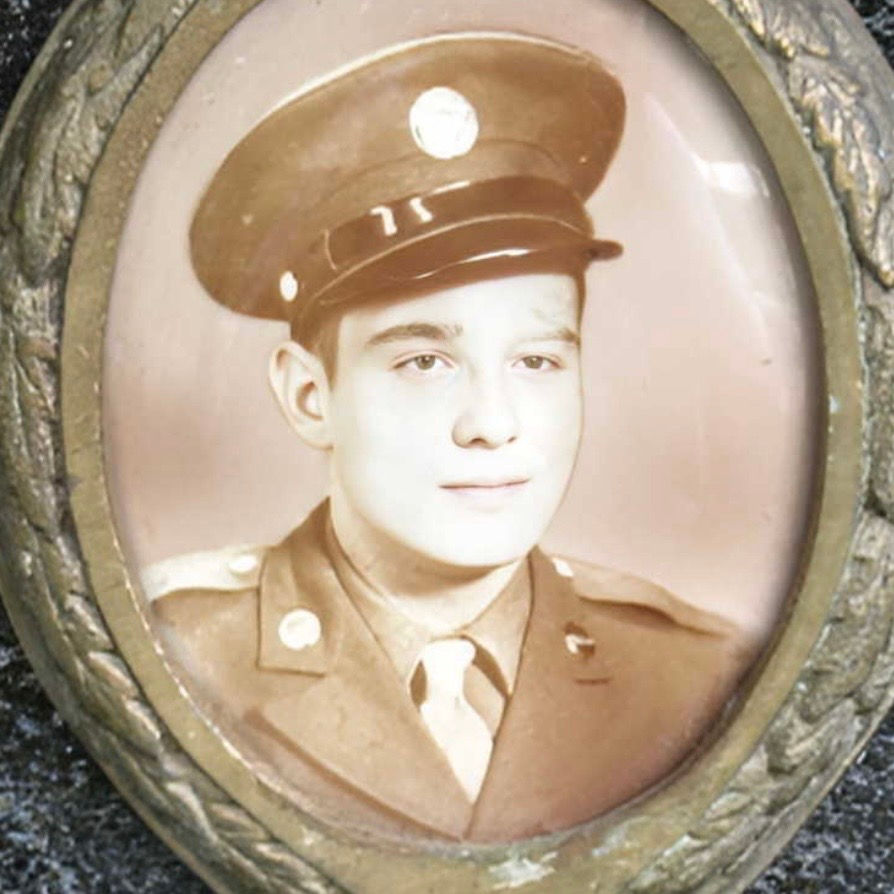
Wiley ended up as a tank driver in General Patton’s Tank Army, pushing hard through France.
David told me that one day, as Wiley was driving his tank over one of those massive European hedgerows, an enemy shell hit the underside of the tank.
The blast didn't leave a scratch on the outside of him, but the pure concussion blew out his eardrum.
It caused him hearing trouble for the rest of his days—he used to keep cotton stuffed in his ear later in life—and that blast is what awarded him his Purple Heart.
Wiley stayed in for his full tour, pushing all the way westward into Germany at the war’s end.
Wiley’s brother, Eldon, mentioned that Wiley actually witnessed the discovery of the concentration camps, though Wiley himself never spoke of the darker things he saw and never brought it up to the family.
Wiley didn't fall on the battlefield, but he brought the weight of that war back home to Eastern Kentucky.
He went off and got a college education then brought that knowledge right back to the very place that raised him.
The One-Room School
at Lower Blue Hole
Wiley married Mable Collett, and together they set down deep roots. Wiley became a well known schoolteacher in these parts.
Cousin David remembers going to school under his Uncle Wiley from the 4th through the 8th grade at the old "Lower Blue Hole" school, a one-room schoolhouse that stood near the Cardinal House.

The school room was heated by a big old pot-belly stove, the boys and girls had to carry drinking water in from a well, and they had outside toilets.
But David says the education they got inside those walls didn't hold anyone back one bit.
Wiley was a deeply kind-hearted and highly intelligent teacher. He started every single morning by reading out of the Bible and leading the children in hymns.
His classroom ran like a little community: everything in its place, older students helping the younger ones along.
When lunchtime came around in the fall and spring, they’d swallow down their food real quick so they could get to a big game of softball with Wiley playing right along with them.
After lunch, the kids would settle in and listen as Wiley read chapters from The Hardy Boys or Nancy Drew.
Going the Extra Mile for
the Mountain Boys
Uncle Wiley’s care didn't stop when the school bell rang, either. When David and Wiley’s son, Raymond, finished high school, they were planning on going off to mechanics school. But Wiley had bigger dreams for them.
He drove right up to Eastern Kentucky University, got both of those boys admitted, and even found them a part-time job with a man named Larry Martin—an old buddy Wiley had served with back in the Army.
David told me he owes a whole lot to Uncle Wiley, Uncle Farmer, and his dad for bringing him up right and making him the man he is today.
His Longest Battle: Fighting for Higher Education
You see, Wiley fought bravely for his country across the sea, but when he came back home to the mountains, his longest and most important battle began.
He looked at the children of our valley and decided that a one-room schoolhouse shouldn't be the end of their road.
Wiley became an advocate for higher education, believing with all his heart that our mountain kids deserved the exact same opportunities as anyone else in the world.

He didn't just teach those eight grades at Lower Blue Hole; he built a bridge to the future.
He fought to pave the way so his own children, his nephews like David, and future generations of mountain kids could break new ground.
Because of the trail he helped blaze, local kids could eventually walk out of those hollers and into the classroom, graduate high school, and head off to college.
If you pass by our Asher Family Cemetery, right on the hill above the Red Bird School, you can see Uncle Wiley’s headrock. It has a picture of him on it, proud in his Army cap, watching over the school and the community he loved so dear.
Part of a Long Red Bird Tradition
Wiley’s story doesn’t stand alone. His life of service fits into a long line of Red Bird men who went when their country called and then came back home and went right back to work for these mountains.
Senator Johnnie L. Turner: A mountain boy who worked hard to graduate from the Red Bird Mission School, served in the Army in the late '60s, and went on to spend his life as a lawyer and State Senator, always looking out for fellow veterans.
George Norton Jr.: Raised in the local mission home, he graduated from Red Bird in 1966 and gave over 30 years to the U.S. military. When he finally retired, he came right back home to serve on the Red Bird School Board.
Kenneth Lawson: A Beverly native who served in the Army during the Vietnam Era, then came back home to spend years working on the maintenance staff at the Red Bird Mission, keeping the place running.
David Jenkins: A Korean War Marine and fellow Purple Heart recipient who wasn't born here, but fell so in love with the valley that he spent 10 years volunteering his time to help the Red Bird Mission.
Our hills are full of names like these—men who saw war up close, carried it home in their bodies and memories, and still chose to spend their days serving students, neighbors, churches, and community.
(These are only A FEW of many, if I have left anyone out, I sincerely apologize and hope you will share my blogpost with the name of your loved one. They deserve to be remembered.)
Remembering Them Together

These men didn’t lose their lives on foreign soil, but they spent their lives in service—to their country first, and then to this valley.
They were given the years their fallen brothers never got, and they used those years to teach, to fix, to vote, to haul, to lead, and to love this place well.
So this Memorial Day, we pause with the whole nation to honor the ones who never made it back—the fallen heroes who gave everything for our freedom.
And as we walk the graveyards on our hillsides, brushing off stones, straightening flowers and remembering the ones we loved, we also remember the veterans of the Red Bird valley who came home.
We tell their stories, like Wiley’s, and we thank God for the way they spent their lives
—showing all of us what faithful service looks like, one classroom, one workday, one child, and one little mountain community at a time.

Comments